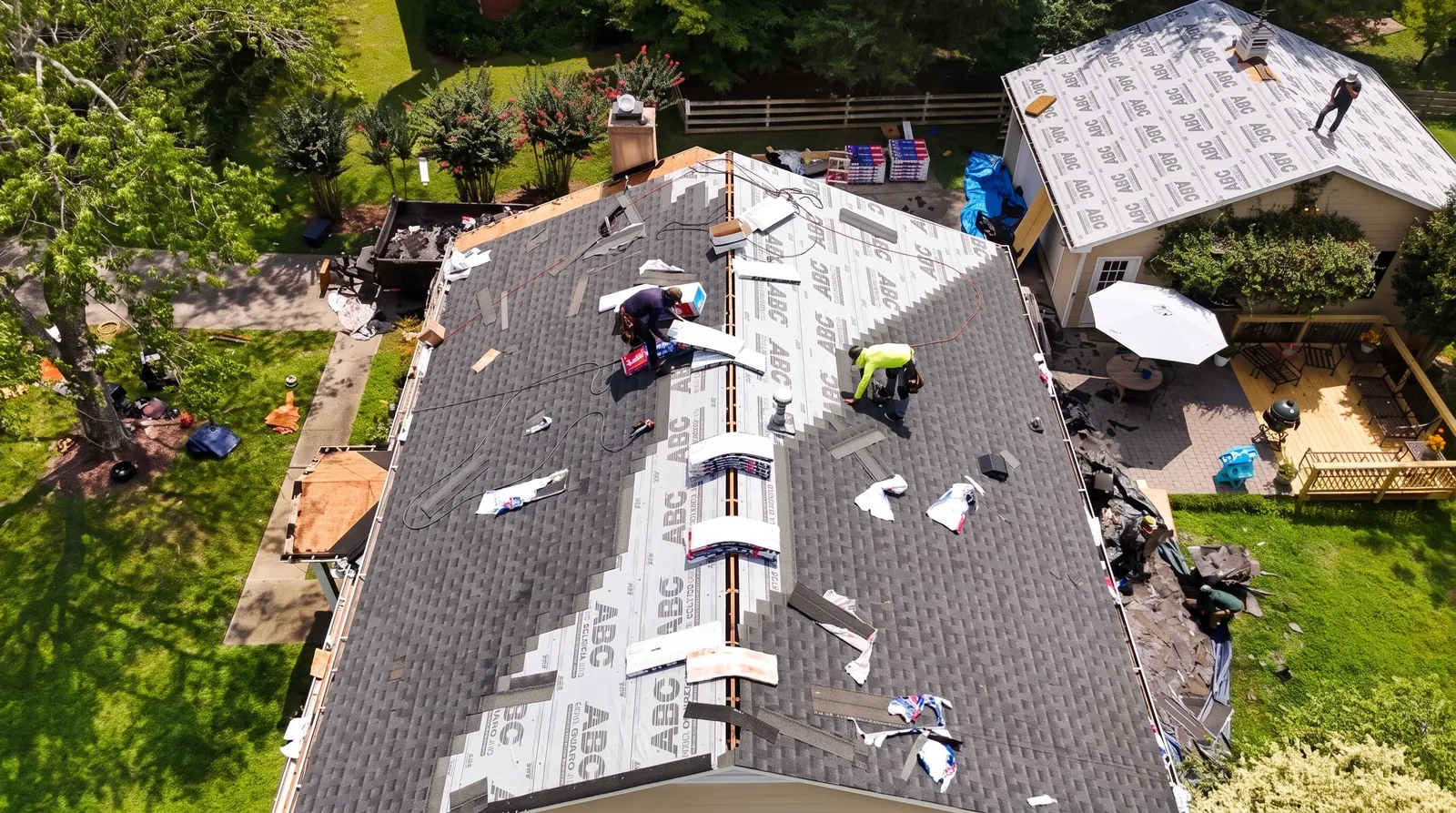
Storms roll through the Charlotte and Lake Norman area every year — spring hail, summer thunderstorms, the tail end of hurricanes pushing inland. When one damages your roof, the first question is almost always the same: will insurance actually pay for this?
In most cases, yes. A standard North Carolina homeowners policy covers sudden, accidental roof damage from events like wind, hail, and fallen trees. What it will not cover is damage from age, wear, or neglect. The difference between a paid claim and a denied one usually comes down to how quickly you document it and how well the damage is proven.
Quick answer
- Covered: sudden damage from wind, hail, fallen trees, and storms.
- Not covered: age, general wear-and-tear, poor maintenance, or gradual leaks.
- How you get paid depends on whether your policy is RCV (replacement cost) or ACV (actual cash value — depreciated).
- Watch for a separate wind/hail deductible — often a percentage of your home's value, not a flat dollar amount.
- Timing is everything — file within days, not months, or the damage gets written off as wear.
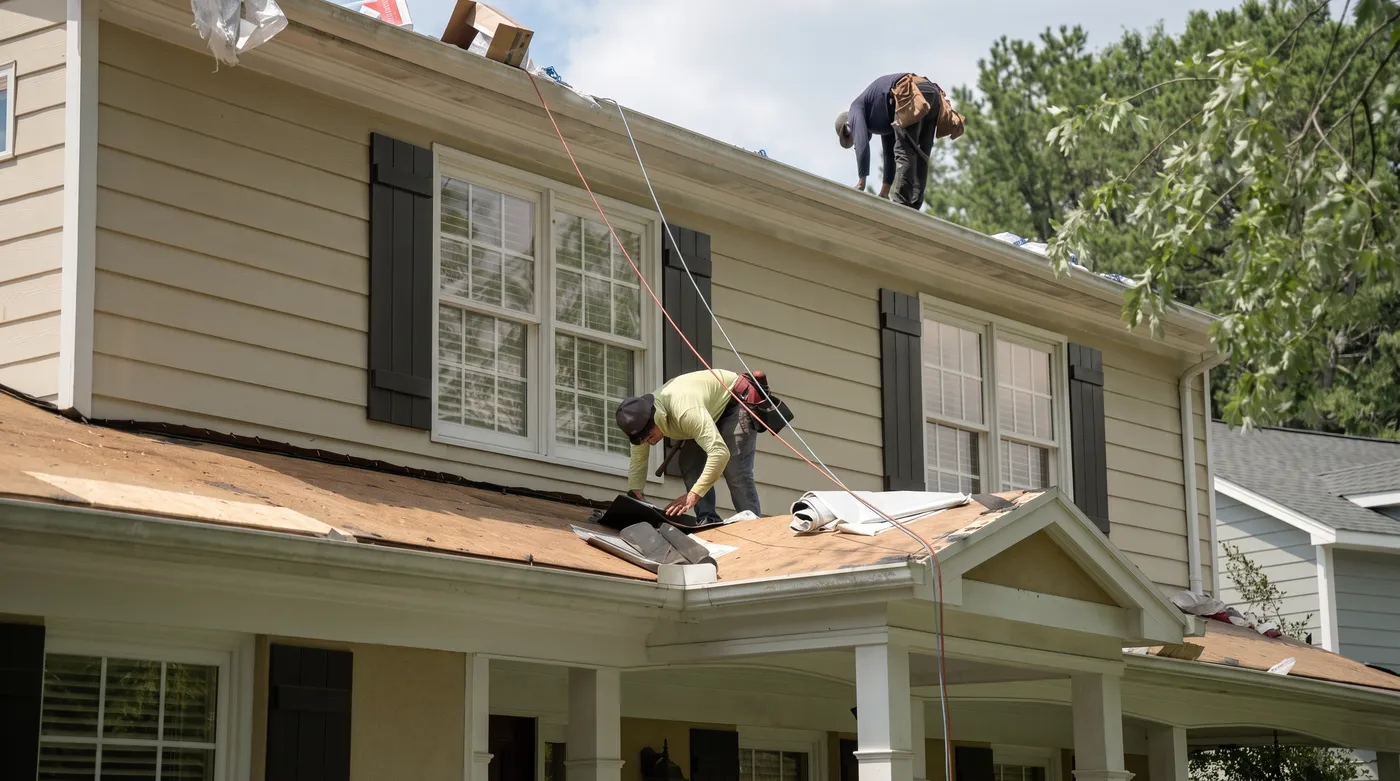
What NC homeowners insurance covers — and what it doesn't
Insurance is built to cover the sudden and accidental, not the slow and expected. Here's how that shakes out for your roof:
| Usually covered | Usually NOT covered |
|---|---|
| Wind-lifted or missing shingles | Shingles worn out from age |
| Hail bruising and granule loss | Gradual leaks from old flashing |
| Trees or limbs falling on the roof | Damage from deferred maintenance |
| Storm-driven water intrusion | Manufacturer defects |
| Sudden structural damage from a storm | Wear-and-tear and normal deterioration |
The takeaway: the cause of the damage matters more than the damage itself. A missing shingle from last night's windstorm is covered; the same missing shingle blamed on a 22-year-old roof is not. That's exactly why documentation right after the storm is so important — it ties the damage to a specific weather event.
ACV vs. RCV — how you'll actually get paid
This is the part most homeowners don't find out until the check arrives, and it's the single biggest factor in what you pocket:
- RCV (Replacement Cost Value) pays what it costs to replace the roof today, with no deduction for age. You typically get an initial payment, then the withheld depreciation is released once the work is completed. This is the better coverage.
- ACV (Actual Cash Value) pays the depreciated value — replacement cost minus years of wear. On an older roof, that can mean a dramatically smaller check, and you cover the rest.
Check your declarations page (or ask us to help you read it) to see which one you have. Some NC carriers have also shifted older roofs onto ACV-only or roof-specific settlement schedules, so it's worth knowing before a storm — not after.
The wind & hail deductible most NC homeowners miss
Here's a costly surprise: many North Carolina policies carry a separate wind/hail deductible that's different from your standard deductible — and it's frequently a percentage of your dwelling coverage (often 1–2%) rather than a flat amount.
On a home insured for $400,000, a 2% wind/hail deductible is $8,000 out of pocket before coverage kicks in. That single line item can decide whether a claim is even worth filing. Always confirm:
- Do you have a separate wind/hail deductible?
- Is it a flat dollar amount or a percentage?
- What does that come to in real dollars for your home?
A free inspection answers the practical version of this question — is the damage bigger than my deductible? — before you commit to a claim.
Signs of storm damage that qualify
You don't need to climb on the roof (please don't). These are the ground-level signs that a storm did real damage worth documenting:
- Shingles on the ground or in the yard and gutters after a storm.
- Dents or bruises on gutters, downspouts, vents, or the AC unit — a strong tell that hail hit the roof too.
- Granules collecting at the bottom of downspouts (that's your roof's protective layer washing off).
- Lifted, curled, or creased shingles visible from the ground.
- New interior signs — ceiling stains, drips, or damp spots after heavy weather.
- Damaged flashing around chimneys, skylights, or valleys.
If you see any of these, get a free storm-damage inspection on record quickly. The photos become the backbone of your claim.
How the claim process actually works
Filing feels intimidating the first time. Here's the real sequence, start to finish:
- Document first. Get a professional, photo-documented inspection. This establishes what was damaged and when — before anything gets patched or weathered further.
- File the claim with your insurer and get a claim number. Report it as storm/wind/hail damage with the date of the event.
- The adjuster inspects. An insurance adjuster comes out to assess. It helps enormously to have your contractor meet the adjuster on-site so nothing gets missed or undervalued.
- Scope and approval. Your contractor and the adjuster align on the scope of work and the settlement. This is where thorough documentation pays off.
- The work gets done. Once approved, roof repair or replacement is scheduled and completed to the agreed scope.
- Depreciation released. On an RCV policy, the final withheld payment is released after the completed work is verified.
Don't wait — why timing decides the claim
The most common reason a legitimate roof claim gets denied isn't the damage — it's the delay. Wait too long and:
- The insurer argues the damage is old wear, not the storm.
- A small leak turns into rotted decking and interior damage you'll pay for.
- You may miss your policy's prompt-notice requirement.
If a storm just came through Charlotte, Huntersville, or anywhere across Lake Norman, the smart move is a quick inspection now — even if the roof looks fine from the driveway. Hail damage in particular is notoriously hard to see from the ground and easy for an untrained eye to miss.
How RGS Home Pros helps
We handle storm-damage claims end-to-end so you're not fighting the insurance process alone:
- Free, photo-documented inspection — the evidence your claim runs on.
- We meet your adjuster on-site so the full scope of damage is captured, not undervalued.
- Insurance claim assistance from first filing through completed work.
- Local crews who know Carolina storms and Carolina roofs.
You choose us — not an insurance-preferred vendor — and we make sure the roof gets restored to the approved scope, done right.
A real example: a Lake Norman–area homeowner came to us with multiple leaks and no idea their roof had been hit by hail. We found it, documented it, and walked them through the claim — and got the entire roof, the detached garage, and the hail-dinged gutters approved. They paid only their deductible instead of a full out-of-pocket roof. Read the full storm-damage story →
Storm may have hit your roof? Get your free assessment — one business-day response, no pressure, and a clear answer on whether you have a claim worth filing.